Before the discovery of insulin in 1921 by Frederick Banting, Charles Best, James Collip, and John Macleod, a diagnosis of type 1 diabetes was an immediate death sentence. At the time, the only available medical treatment was a severe starvation diet intended to minimize blood glucose levels, which drastically reduced daily calorie intake to delay diabetic ketoacidosis. As a result, young patients rapidly declined, experiencing extreme muscle wasting and emaciation that left them severely malnourished and close to death.
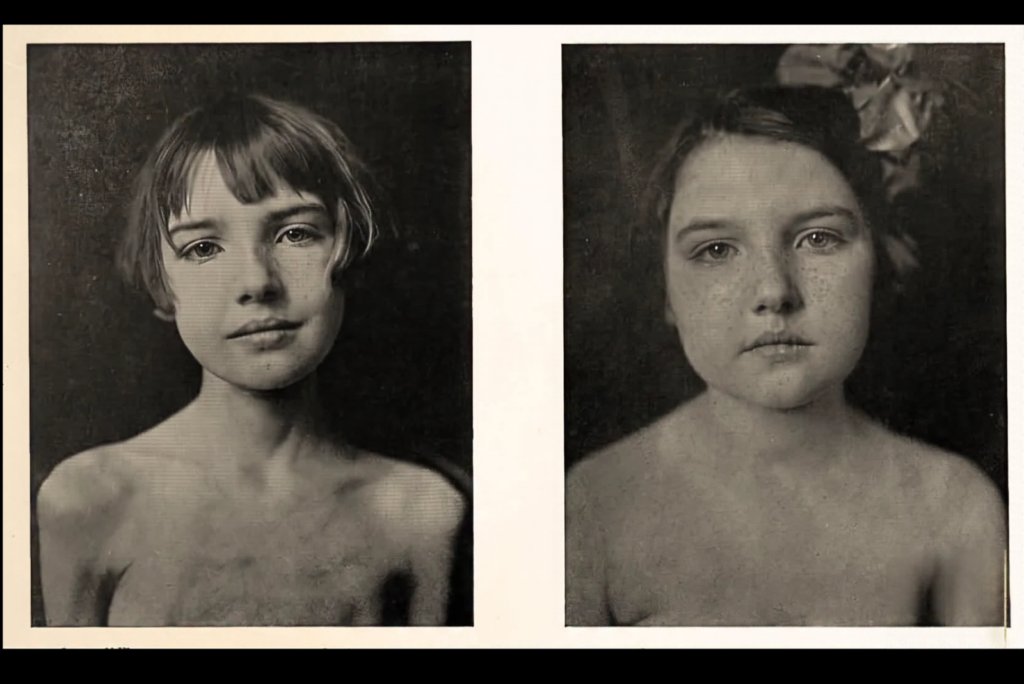
The photographs depict a three-year-old child known in medical archives as “Patient J.L.,” who was treated by Dr. William McKim Marriott at St. Louis Children’s Hospital. After battling diabetes for two years on a strict starvation diet, the toddler weighed a mere 15 pounds on December 7, 1922, as captured in the image on the left. Following the breakthrough availability of purified pancreatic extract (insulin), J.L. became one of the earliest pediatric patients to receive experimental insulin injections.
Within just four months of beginning treatment, J.L. underwent a life-saving transformation. The child rapidly regained healthy weight and muscle mass, nearly doubling body weight to 29 pounds as the body finally gained the ability to process glucose. These photographs were published in medical journals and pharmaceutical archives, such as Eli Lilly and Company’s records, serving as dramatic early visual evidence of insulin’s ability to pull dying children back from the brink of death.